How risk prioritization is reducing SAIDI by 8%
Escalating wildfire risk, bad data, and no system-wide view of risk.
A large US utility has been facing escalating wildfire risk, equipment-driven outages, and mounting regulatory scrutiny. With billions in market capitalization losses and hundreds of millions of dollars in rising insurance premiums tied to wildfire-related events, the utility was searching for a holistic approach to assess and manage system-wide risk.
Despite extensive data collection efforts, inaccuracies in GIS had been undermining downstream modeling and planning. Every analysis was getting bogged down with caveats that weren't translating well to system-wide prioritization.
Existing tools relied on probability-based ignition risk metrics derived from historical failures that could not determine which assets would fail under specific real-world conditions. Structural risks (overloaded poles, cascading failures, clearance violations, and unsafe third-party attachments) were making operating in a dynamic environment slow and uncertain.
A physics-enabled digital twin unified all risk data in one defensible model.
Armed with billions in capital and millions in O&M allocated to strengthening network resilience, the utility needed a way to identify and prioritize upgrade decisions to mitigate risk.
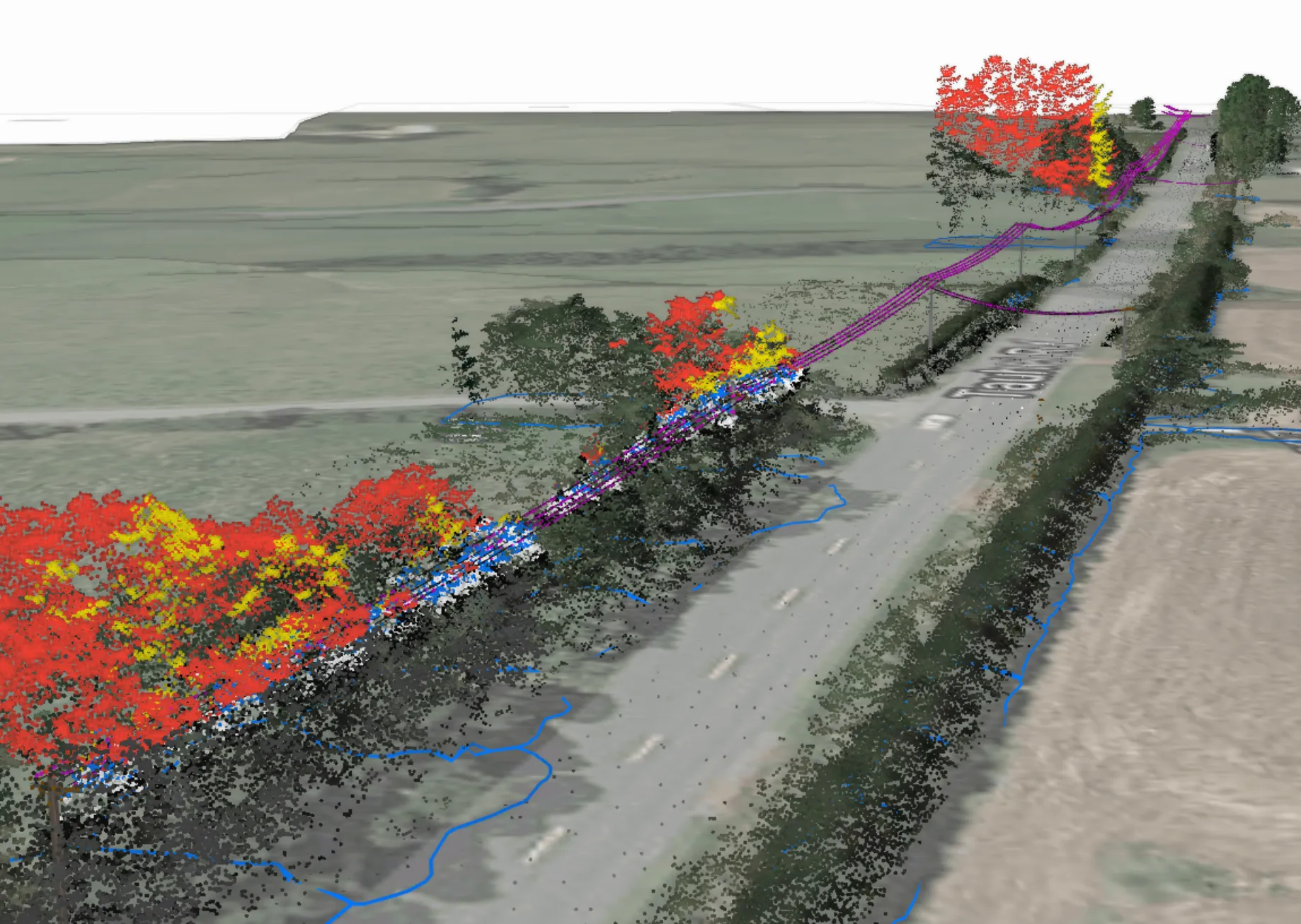
The utility partnered with Neara to deploy a physics-enabled digital twin, unifying GIS, LiDAR, inspection, and vegetation data into a high-fidelity structural model of its entire network. Risk-weighted simulations enable network-wide aggregation, feeder-level comparisons, and per-structure scoring, providing a consistent basis for prioritization across wildfire mitigation, attachment management, and capital planning.
Neara also addresses long-standing data quality challenges, establishing a trusted foundation for system-wide decision-making. With a defensible, physics-based framework for prioritizing upgrades, the utility has shifted from reactive maintenance to proactive, data-driven planning.
8% projected SAIDI reduction. $5M+ in recoverable revenue identified.
This physics-based approach is giving teams across planning, engineering, and operations a shared view of risk, enabling them to evaluate trade-offs, test remediation scenarios, and prioritize upgrades with confidence. It is driving data-backed planning and investment across a $1.5 billion capital plan.
Key results include:
An 8% projected reduction in System Average Interruption Duration Index (SAIDI) minutes, saving millions annually. Identification of nearly 10% of poles as overutilized, with several leaning more than 15 degrees and exhibiting clearance breaches or cascading failure risk. Detection of unauthorized telecom attachments, uncovering clearance violations and $5–10 million in potential recoverable annual revenue from unbilled rent.
Foundational data improvements include correction of 80% of pole classifications, refinement of 10% of pole heights, reconciliation of inspection and vegetation records, and improved GIS accuracy.
With a defensible, physics-based framework for prioritizing upgrades, the utility is shifting from reactive maintenance to proactive, data-driven planning. The result is faster, more confident investment decisions that reduce wildfire risk, improve safety, and capture new revenue opportunities, while strengthening long-term network resilience.
See physics-based modelling in action.
Discover how Neara delivers engineering-grade clarity for the world's most critical infrastructure, or explore more results from utilities worldwide.