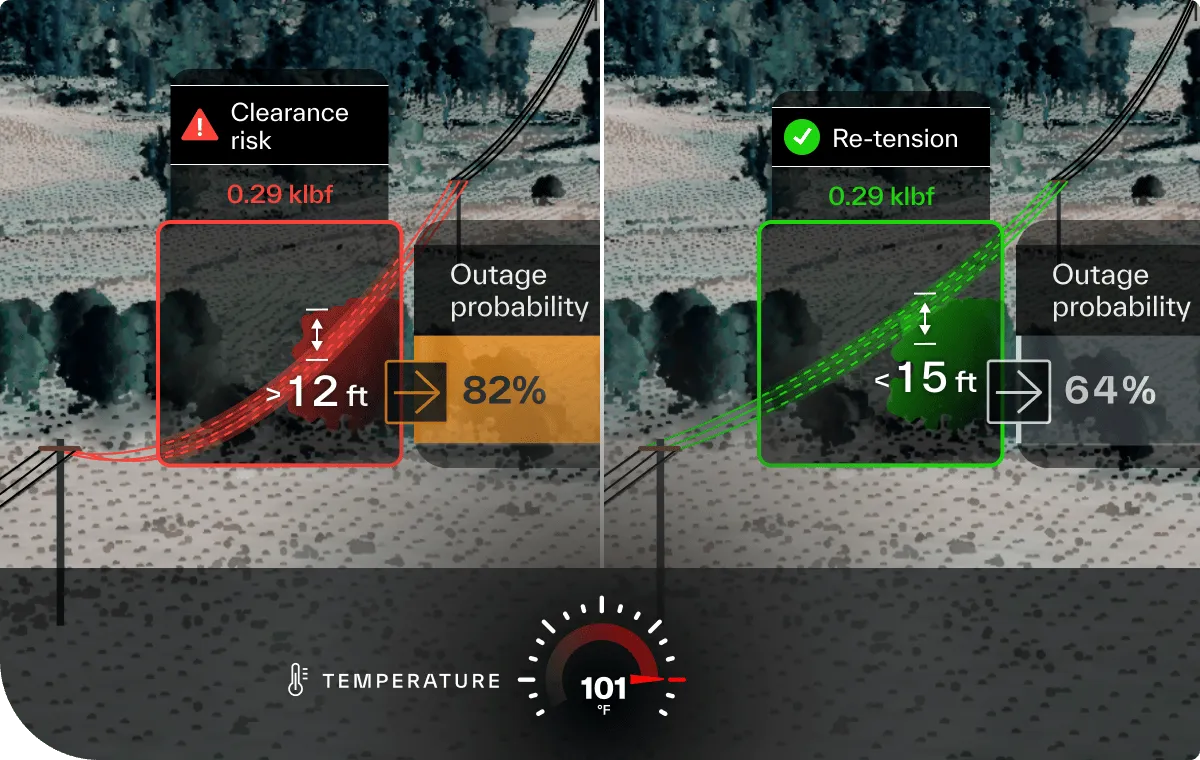
Forecast and Backcast Resilience
See how your network will perform in any scenario and prove which upgrades actually improve reliability.
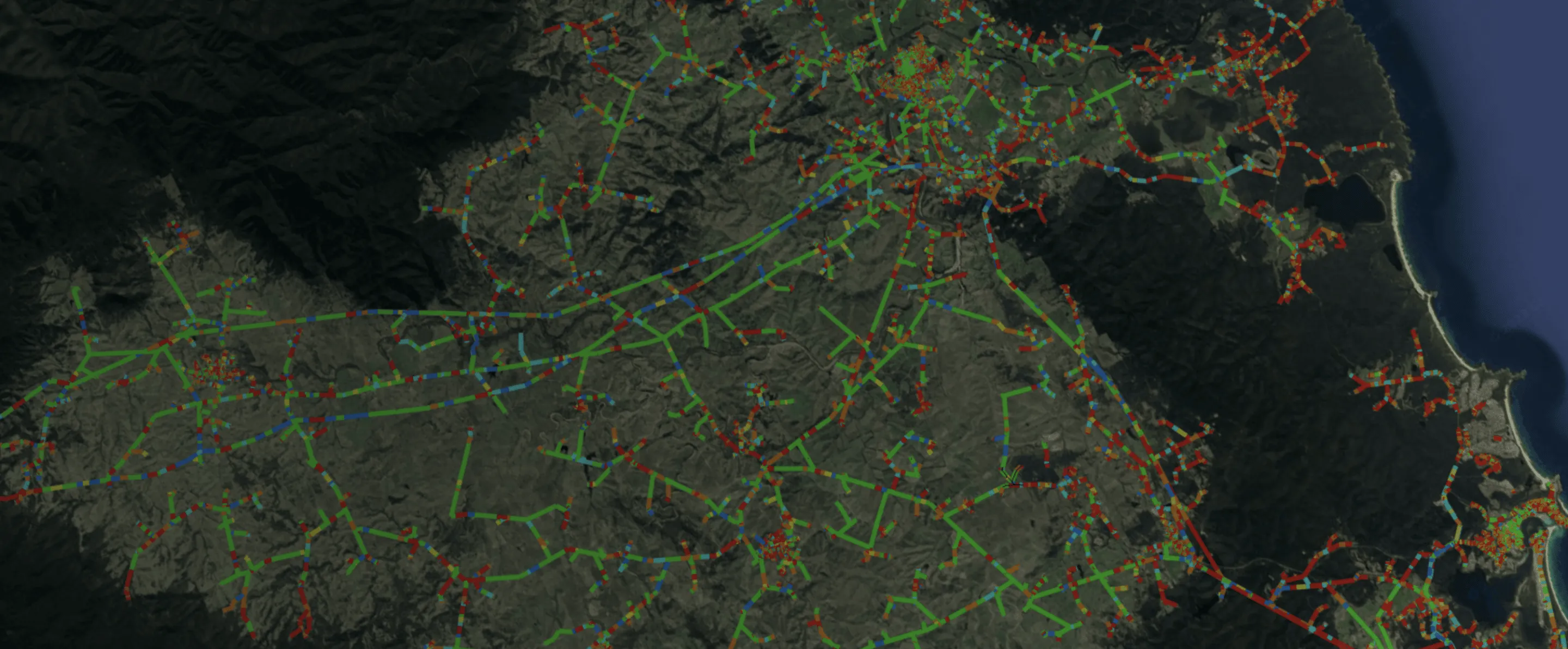
Forecast how every asset in your network will respond to heat waves, hurricanes, hail storms, and everyday loading. Pinpoint the upgrades that move the needle at the individual asset level, then backcast performance to show exactly how those changes improve reliability. Let the model handle the calculations so you can explore every scenario and build fast, defensible consensus for your plan.
- Simulate how severe weather and operating conditions will impact your assets so you see where your network is most vulnerable and can prioritize the right upgrades.
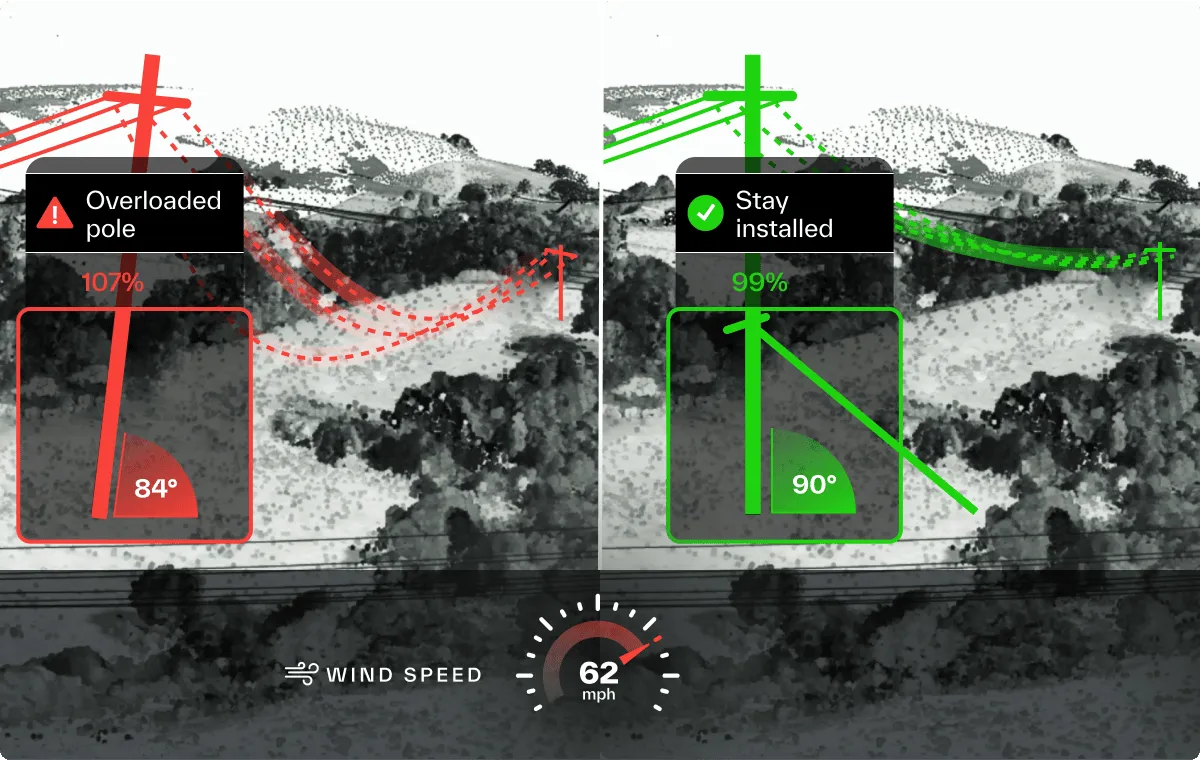
- Quantify resilience improvements at the individual asset level using metrics such as pole lean and cable clash rates, and connect them to system outcomes like SAIDI and SAIFI.
- Automate ROI analyses across pre and post improvement states by backcasting upgrade impacts so you can forecast, deliver, and measure resilience gains and validate key decisions.
How do you turn any scenario into a recovery strategy?
Generate a fast recovery strategy for any scenario
Turn any scenario into a clear recovery roadmap by bringing dangerous conditions into your model before they arrive in the field.
- Prioritize targeted upgrades instead of applying broad reinforcement cycles.
- Translate asset level metrics like conductor creep, line tension, and pole loading into SAIDI, SAIFI, and safety outcomes.
- Show how the same storm would play out before and after planned upgrades to prove your plan reduces risk.
- Move from generic resilience statements to concrete, testable strategies.
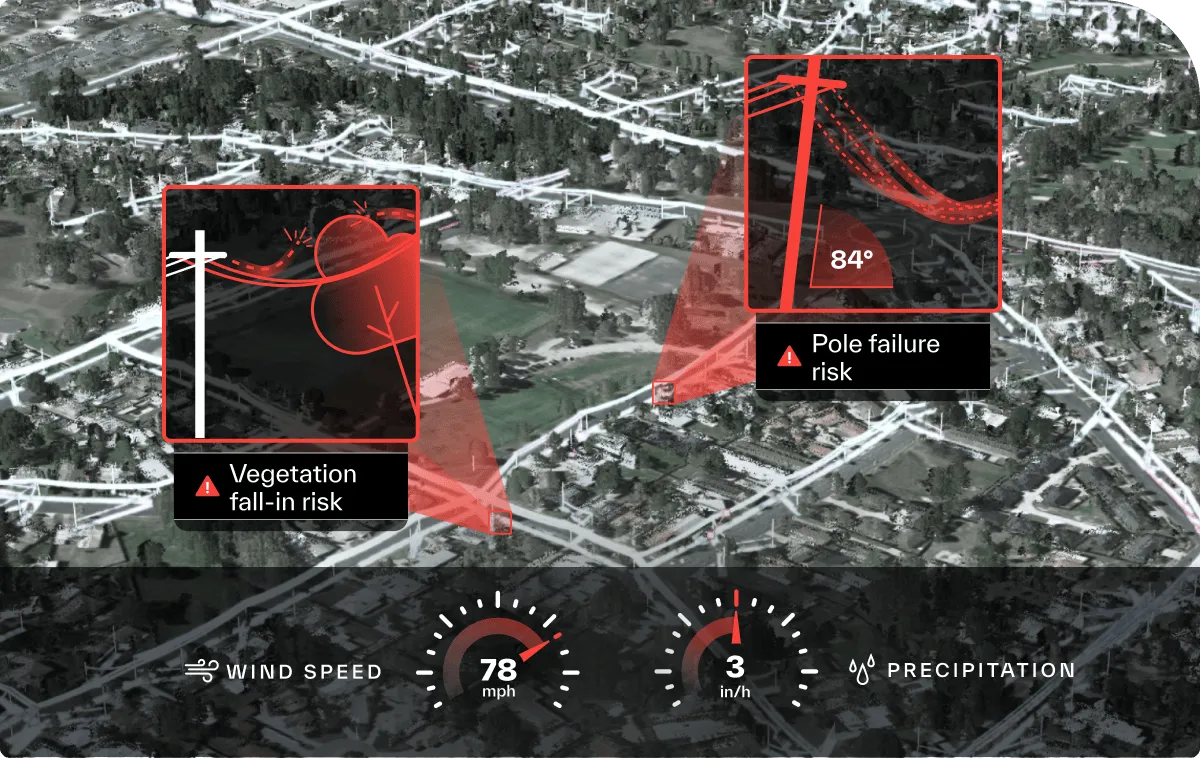
How do you keep pole utilization productive without risking failure?
Mobilize restoration and repair crews faster
Find the loading window that supports productivity without crossing safety limits by stress testing every pole against mechanical and environmental variables.
- See where current and proposed attachments push loading toward unsafe levels.
- Identify specific structures that need reinforcement or redesign before you add more equipment.
- Give repair crews a clear view of which poles are most likely to fail so they can stage resources.
- Build a network that carries more without leaving you exposed in the next storm.
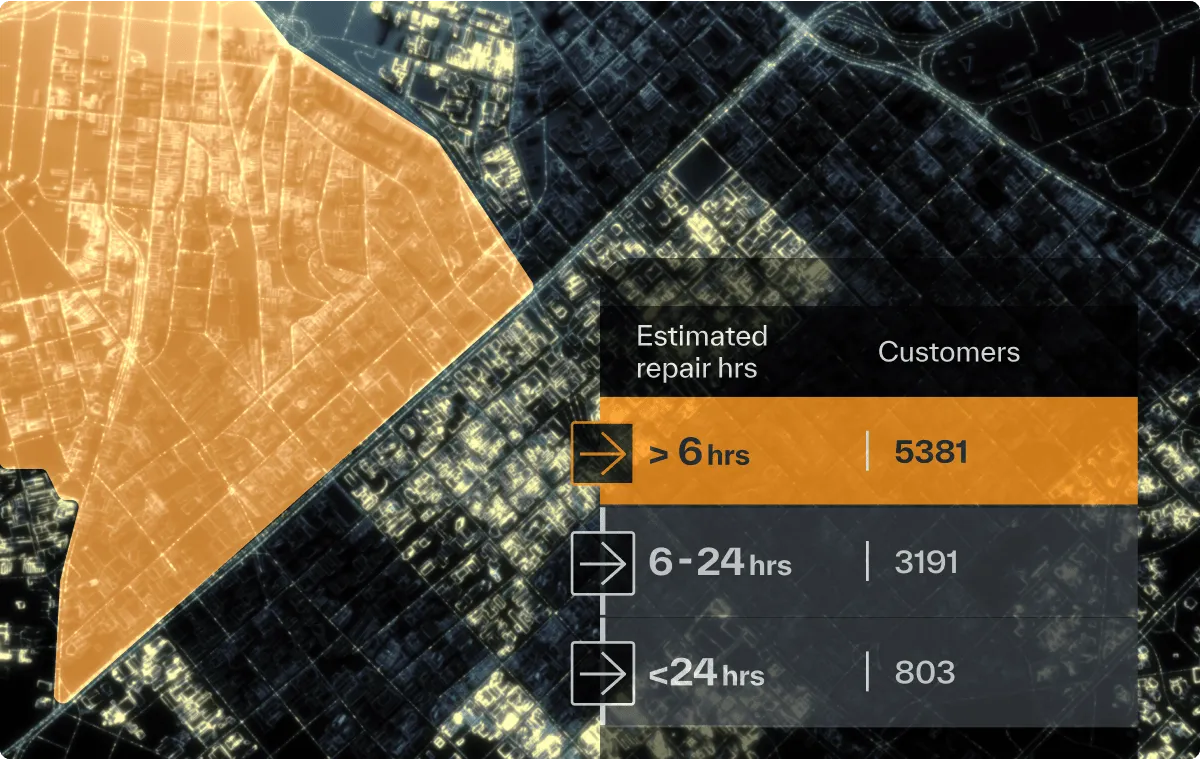
Which upgrades actually change reliability outcomes?
Validate every asset upgrade
Use an individual asset health view to see which structures, spans, and lines truly require attention in your conditions.
- Predict exactly which poles, spans, or conductors are likely to fail in defined scenarios.
- Replace or reinforce only the assets that limit system performance instead of entire classes or regions.
- Justify every upgrade by comparing pre state performance in extreme conditions against the strengthened post state.
- Turn upgrade proposals into evidence backed recommendations instead of line items that are hard to defend.
How do you prove that O&M spend improves resilience?
Demonstrate how every O&M line item improves resilience
Use scenario based modeling to show how vegetation work, inspections, and other O&M activities reduce real risk instead of just ticking compliance boxes.
- See which spans and structures face the highest strike and clash risk, including outside standard rights of way.
- Support vegetation and maintenance decisions with hard data about community risk, not just distance rules.
- Run pre and post maintenance scenarios to show improved clearance, reduced clash incidents, or prevented outages.
- Defend O&M budgets and navigate difficult ROW discussions with hard data.