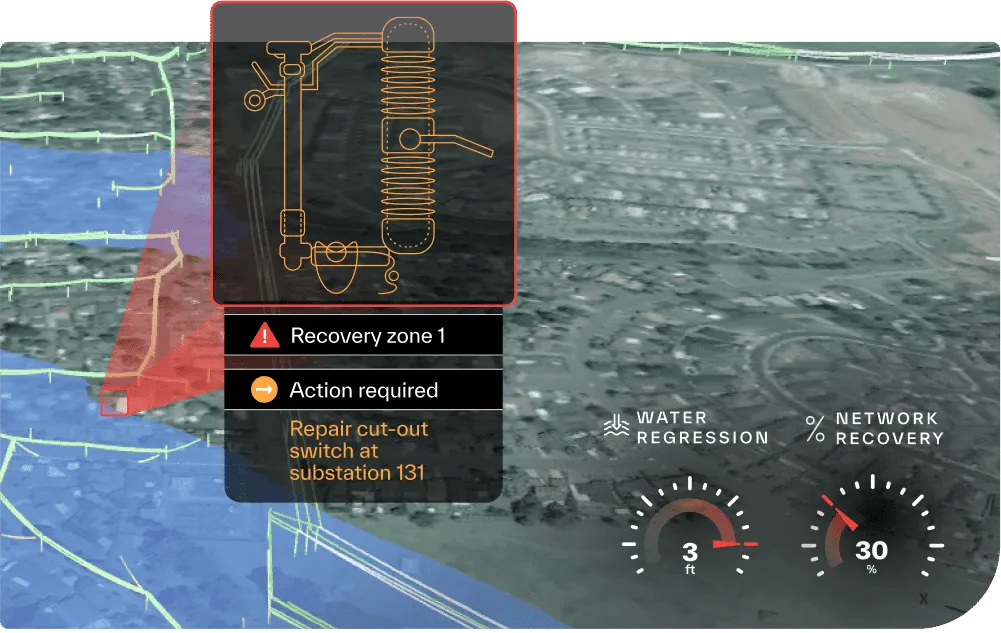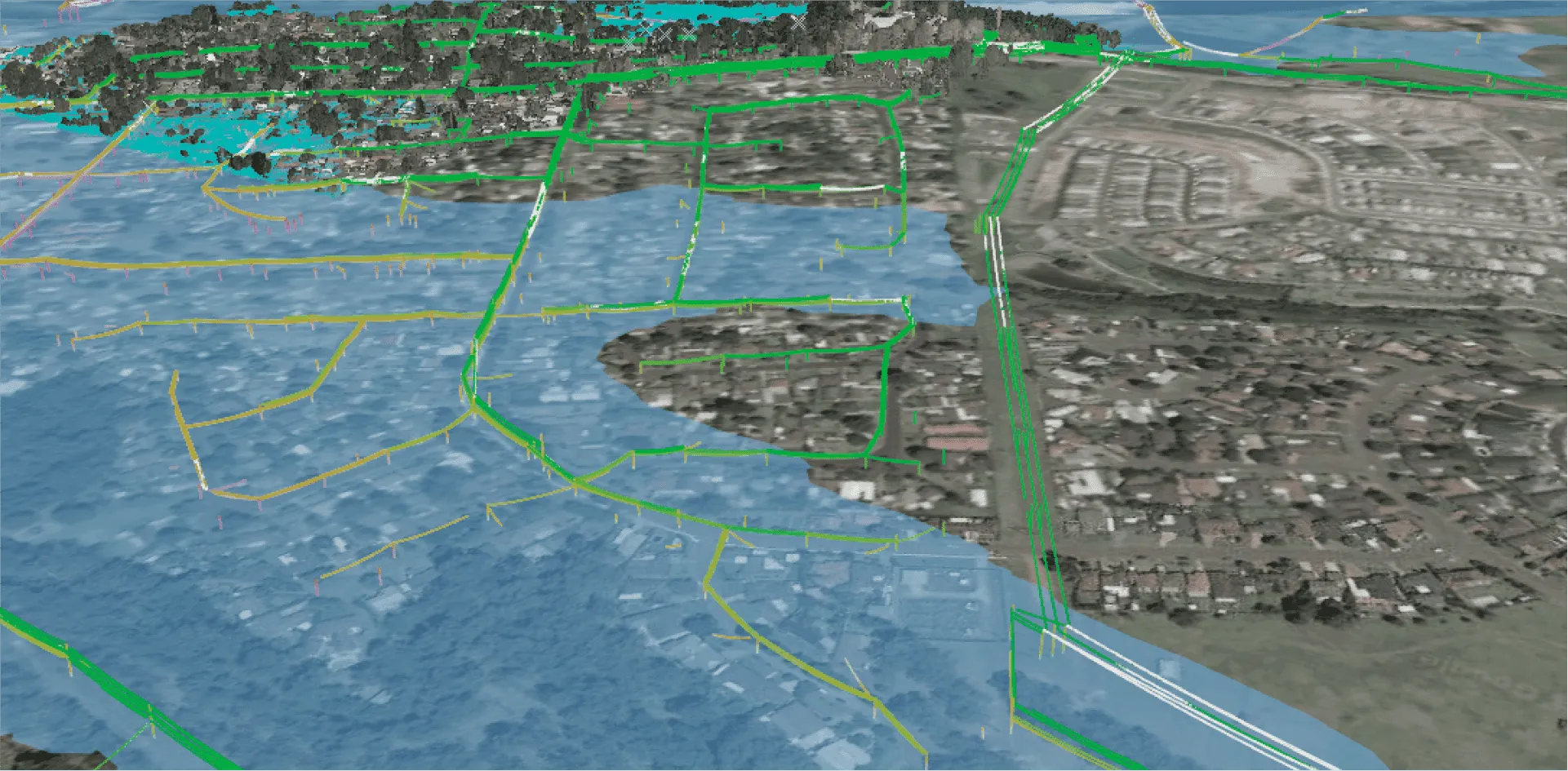
Flooding may be unavoidable, but crippling damage and long outages do not have to be. Your digital network model lets you see how floods will unfold, decide what to protect first, and restore power with decisions you can stand behind.
- Simulate flooding conditions to pinpoint the parts of your network most likely to be submerged, isolated, or damaged so you can take pre‑emptive steps to soften the impact.
- Make informed power dispatch decisions that reduce electrification risk while accounting for hospitals, critical customers, and community priorities.
- Use your network model to prioritize the repairs that restore power to the most customers safely, as fast as conditions allow.
Where will flooding hit your network hardest?
Identify flood risks
Use a precise digital network model that reflects how your assets actually behave in their environment to understand where floodwaters will threaten your network.
By incorporating elevation, terrain, and soil characteristics, you can:
- See how close water levels are likely to come to specific poles, spans, and substations.
- Test different flooding scenarios such as riverine, flash, and coastal floods and see which assets are at risk in each case.
- Stay ahead of safety and reliability risks by planning where to harden, where to build redundancy, and where to stage equipment.
How do you manage power dispatch as conditions change?
Monitor the situation and assess power dispatch
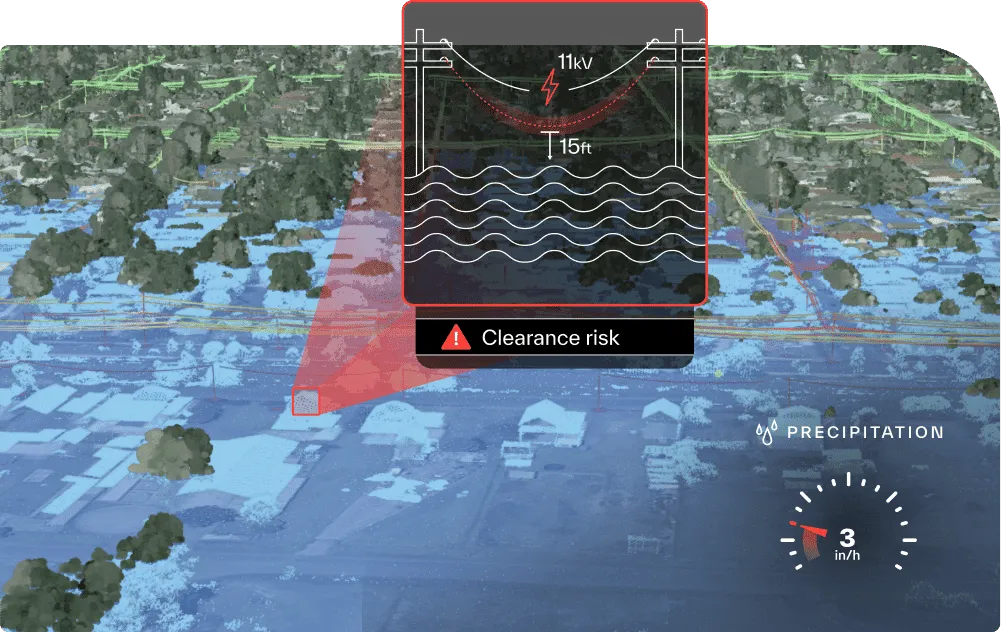
Track how flooding is affecting your network in near real time and follow water levels around critical assets.
Give control room operators and planners a single, physics‑grounded view of:
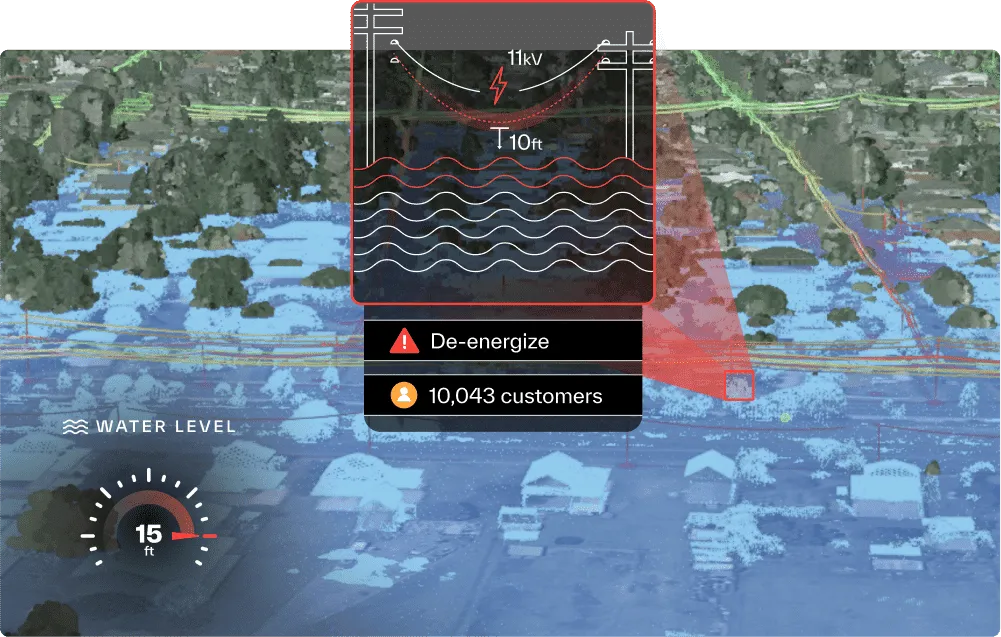
- Which sites to power down and when to avoid dangerous electrification and back‑feed risks.
- Where to maintain or reroute supply to protect critical services and vulnerable customers.
- Which locations will likely need repair or replacement resources once waters recede.
Your digital network model, coupled with live weather and level data, becomes the shared source of truth that keeps all stakeholders aligned when decisions are moving fast.
How quickly and safely can you restore power?
Rebound quickly
Restore power as fast as conditions safely allow, without sending crews into avoidable danger.
- See which parts of your network field crews can safely access even while high water persists, and which areas must wait.
- Focus remediation work with a clear list of compromised assets, likely failure modes, and the customers each repair will bring back online.
- Cut down on blind patrols and repeat site visits by giving crews a precise picture of what to expect before they arrive on site.
The result is a flood response you can explain to regulators, leadership, and your community, backed by transparent, auditable calculations instead of after‑the‑fact justifications.