How one utility unlocked nearly 3,000 MW of renewable energy
A new 500 kV line needed across 350 km of terrain, in 4 weeks.
A large Australian utility sought to expand its renewable energy efforts. The utility needed to build a new 500 kV transmission line in order to unlock nearly 3,000 MW of renewable energy on a tight timeframe. The area between the existing network and the renewable energy zone stretched more than 350 km, meaning the new line would need to traverse complex terrain.
The design engineers needed to prove that the design would fulfill stringent clearance and easement regulations, as well as comply with strict derating factors to ensure the structural integrity of towers, components, and cables.
The team needed flexibility to experiment with span length, a key project cost variable, to ensure the total project cost fell within budget. Final design plans were due in 4 weeks and would otherwise be subject to up to an extra 12 months of review time.
Physics-based simulation replaced weeks of manual design work.
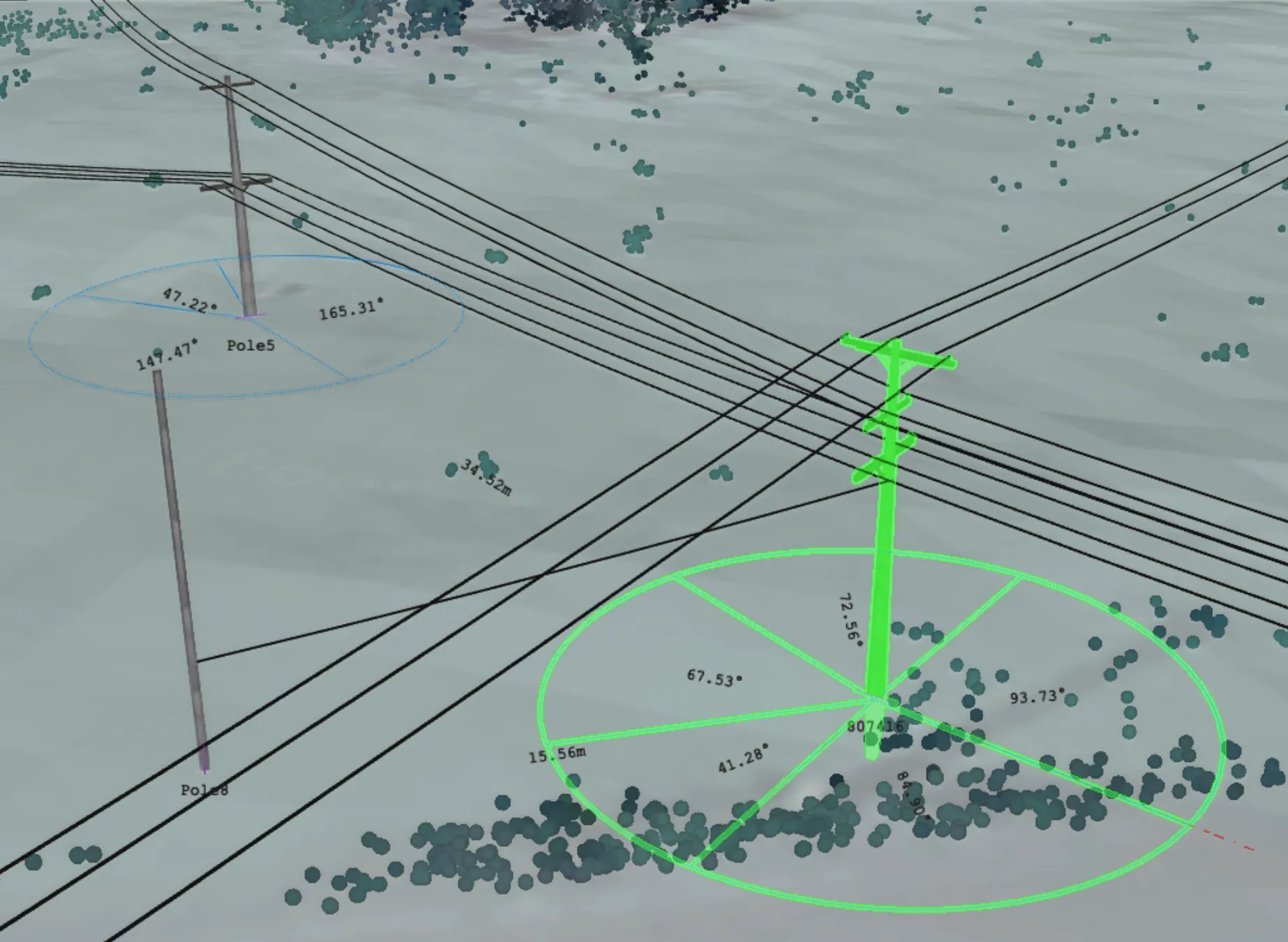
Using Neara's physics-enabled digital twin, the design team was able to simulate different routes and surface potential roadblocks in a flexible digital environment, allowing them to explore mitigants before objections could threaten to stall the project.
Digitized design tools allowed the team to experiment with span length and route configurations in real time, cutting costs while ensuring compliance with clearance and easement regulations. Easy-to-understand design visualization dashboards minimized stakeholder friction and accelerated project construction.
The team used Neara's platform to complete transmission planning, design, and drawings in less than 2 weeks, half the original 4-week timeline.
Design completed in half the time, ahead of a critical regulatory deadline.
Neara enabled the utility to complete transmission planning, design, and drawings in less than 2 weeks, compared to the original 4-week timeline. This completed the work in half the time and well ahead of the regulatory deadline that would have triggered an additional 12 months of review.
Digitized design tools allowed the team to simulate different routes and surface potential roadblocks in a flexible digital environment. Easy-to-understand design visualization dashboards minimized stakeholder friction and accelerated project construction.
The result was a defensible, physics-based design that satisfied regulators, stayed within budget, and positioned the utility to unlock nearly 3,000 MW of renewable energy for the region.
See physics-based modelling in action.
Discover how Neara delivers engineering-grade clarity for the world's most critical infrastructure, or explore more results from utilities worldwide.